





Think about the last time you walked through a supermarket. From high-protein labels to gut-friendly products, protein water, collagen drinks, probiotic yoghurt, high-fibre snacks, plant-based ingredients and foods promising everything from better energy to better gut health, loads of innovative products are flocking our shelves.
It doesn’t just stop with the shelves. AI is now helping with calorie and macro tracking, while food companies are experimenting with precision fermentation, alternative proteins and edible insects to turn them into food products. Food technologies have rapidly evolved. There are new, innovative and novel processes and technologies from farm to table.
The Data City initially developed FoodTech Real-Time Industrial Classifications (RTICs) in 2021 and used https://forwardfooding.com/ as a source to develop the sector definition. Since the creation of this Real-Time Industrial Classification definition, the sector has changed and evolved. To keep it in line with these changes and reflect the current innovative activities in the sector, the RTIC has undergone a full update.
What has changed in this update?
The key changes in the 2025 update are the retirement of the Agritech and Food Processing verticals. This does not mean that either area is any less important to the wider food ecosystem. Rather, both are now better represented elsewhere in the taxonomy.
The Agritech vertical is now captured through a dedicated AgriTech RTIC , developed in collaboration with the Agritech Centre. This provides a much more comprehensive view of innovation across the agricultural sector, from farming technologies and inputs through to the production of food.
Food processing is similarly captured through the Advanced Manufacturing RTIC, where the technologies, processes and manufacturing capabilities underpinning modern food production can be identified more effectively.
The update also introduces clearer and more tightly defined boundaries around FoodTech. As a result, the RTIC is narrower than its predecessor, but this is intentional. The aim is not to capture everything connected to food, but to identify the companies developing genuinely innovative technologies, products and processes within the Food Tech ecosystem.
FoodTech landscape
FoodTech is inherently cross-cutting because it sits at the intersection of agriculture, biology, manufacturing, consumer products, and climate, spanning the full journey from how food is grown and produced to how it is processed, formulated, distributed, and consumed. As a result, it naturally overlaps with adjacent sectors. Our taxonomy is designed to reflect the different stages of the wider food ecosystem. Using our RTICs, you can define the various stages of the food ecosystem.
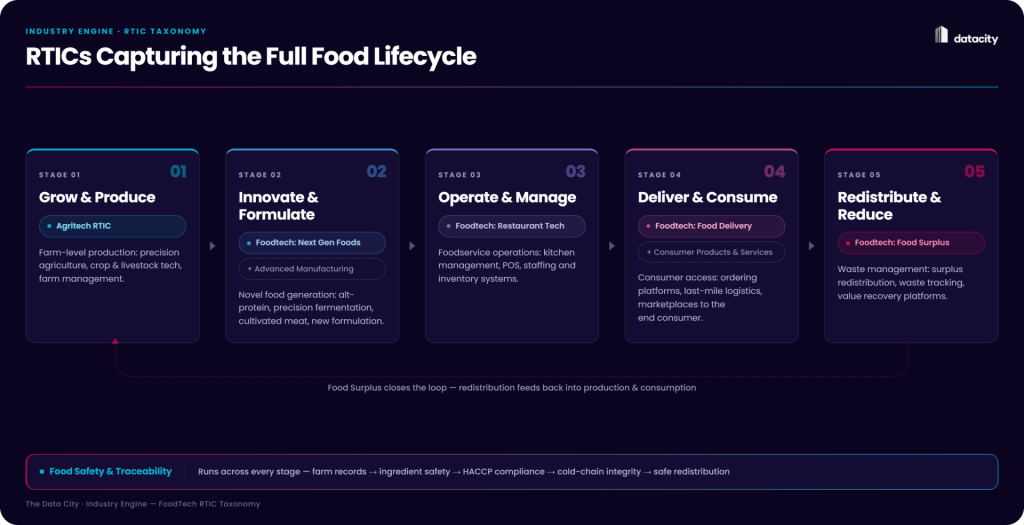
FoodTech also naturally intersects with broader technology RTICs such as Net Zero, Engineering Biology, Advanced Manufacturing and AI. Companies operating at these intersections may therefore appear across multiple RTICs, reflecting the increasingly interconnected nature of food innovation.
Companies in this sector
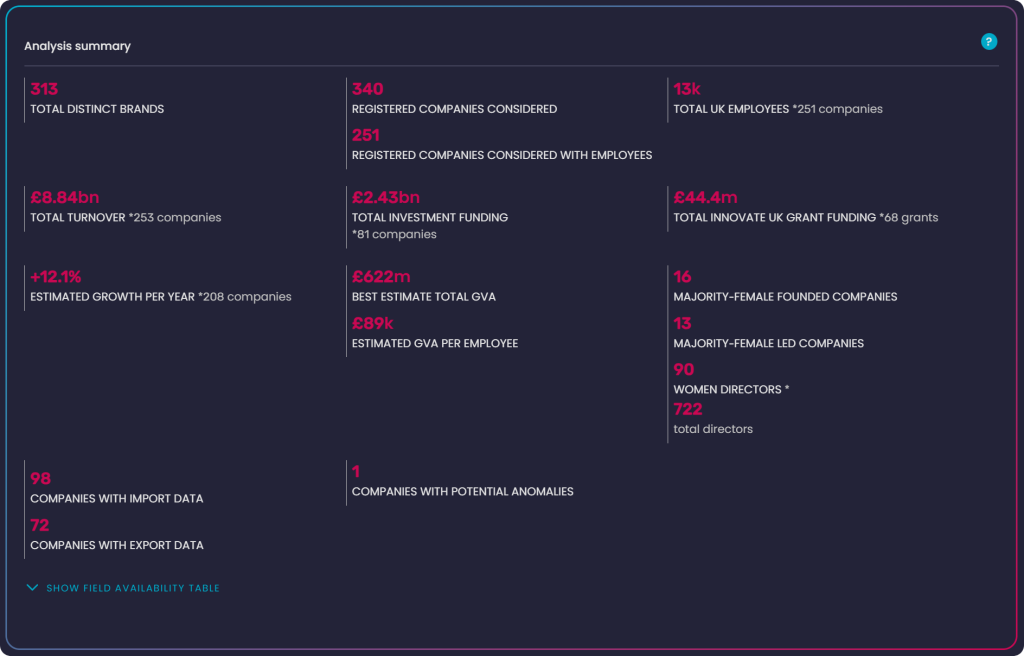
Our Industry Engine makes it straightforward to identify innovative companies in this sector. Our Innovation Score provides a language-driven view of companies using signals such as patent activity, R&D intensity and technology-driven growth. Funding and grant data add another layer, highlighting businesses attracting investor and public-sector support. We can also filter for diversity indicators, such as female-led businesses. Together, these signals help us move beyond anecdotal examples and identify some standout companies within the FoodTech sector.
Below are some picks from this approach:
Apoha
Apoha is a London-based company developing new ways to understand how food and drink ingredients behave. Its Liquid State Intelligence technology measures the physical behaviour of ingredients and formulations to create a unique “fingerprint”. Rather than relying mainly on traditional taste testing, Apoha uses data to help predict how a food or drink will taste and feel. The company has also received an Innovate UK grant within the last three years.

Orderly
Orderly is a certified B Corp providing software to help restaurants and food businesses manage purchasing, stock and inventory. Its technology includes an AI-powered Digital Assistant that helps businesses predict what they will need, make better ordering decisions and reduce food waste.

Scorpion Vision
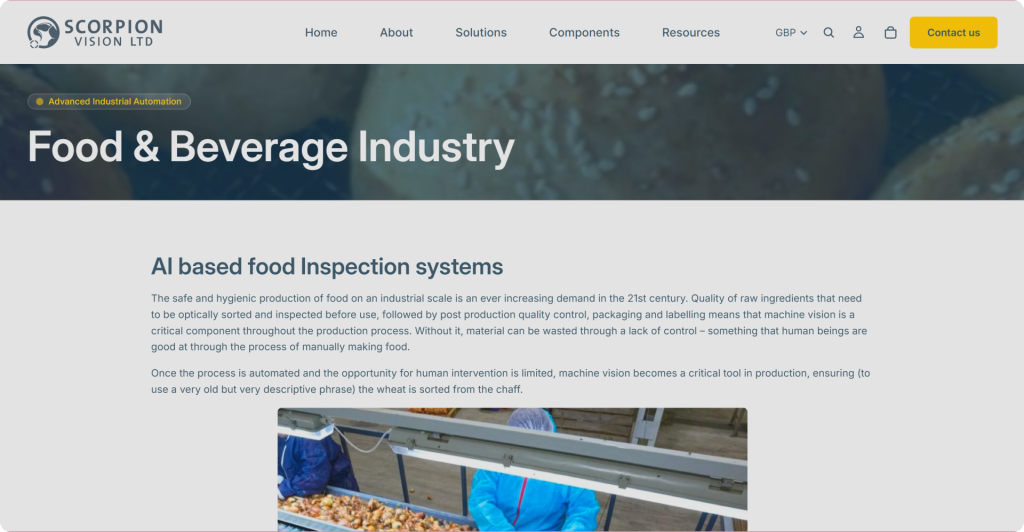
Scorpion Vision develops machine vision technology for industries including food production. Based in Lymington, Hampshire, it uses AI, cameras, and 2D and 3D vision systems to inspect food products during production. Its technology can assess size, shape, colour and quality, identify defects, and automate sorting and handling.
Dovetailed- nūfood
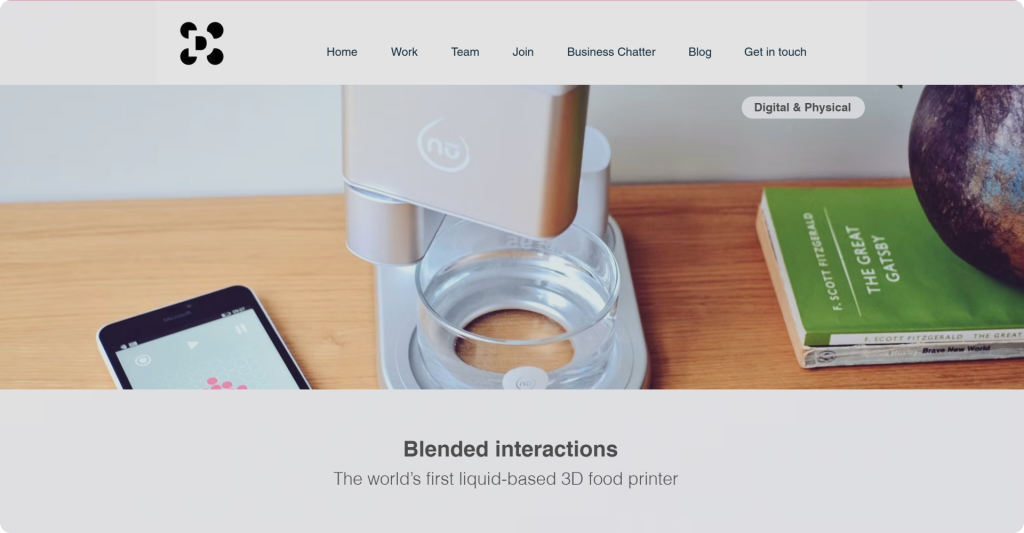
Dovetailed is a Cambridge-based company that developed nūfood, a liquid-based 3D food printer. Rather than using plastic or other traditional 3D-printing materials, the technology uses food ingredients to create small, edible products in different shapes, colours and flavours. Users can design food through an app and have it printed within minutes.
Olio
Olio is a UK-based, female-founded company, founded by Tessa Clarke and Saasha Celestial-One, that uses technology to tackle food waste. Its app connects businesses with local volunteers, known as Food Waste Heroes, who collect surplus food and list it on the app so people nearby can claim it.

Explore the FoodTech sector with The Data City
FoodTech shows how fast innovation moves once you stop looking at a sector as one block and start looking at where the real activity sits. The 2025 update gives a clearer picture of the companies building genuinely new technology, from ingredient science to food waste platforms, rather than everything loosely connected to food.
Want to see the full sector yourself? Get in touch with our team to explore FoodTech RTIC in Industry Engine or book a demo to see how our Innovation Score and Funding data can help you find the companies shaping this space.
Please note: The data from The Data City is accurate at the time the article was written but may change over time due to the dynamic, real-time nature of our data. For the latest insights, visit our platform.