





How can you identify existing companies that could enter the UK’s Defence supply chain? That’s a big question in policy circles currently. Here’s how to do it using The Data City and our new Defence dataset, built with ADS Group.
The problem with official statistics
In the modern economy it’s not uncommon for companies to operate in more than one sector. For example, there are Defence companies that are also AI companies.

Official statistics don’t recognise this. The rules set to create them mean that the company is defined as either Defence or AI, rather than both. This makes understanding which sectors are adjacent to Defence difficult to do – it doesn’t show the sector cross over. And without this information, finding potential Defence companies within these sectors is very difficult to do.
How The Data City solves this
The Data City’s data solves this problem in two ways. The first is that it does allow companies to fit into more than one sector definition, so identifying ‘defence adjacent’ activities becomes straightforward. You can see these sectors by looking at the other sectors that current Defence companies operate in.
The second is that our Real-Time Industrial Classifications (RTIC) create more useful sector classifications for these companies. This makes it easier to create a tightly-bounded definition Defence-adjacent activities.
Identifying Defence-adjacent companies
To take an example, let’s look at Aerodyne (see picture). It provides analysis of data captured by drones, but (as far as we know) doesn’t work in the Defence sector.
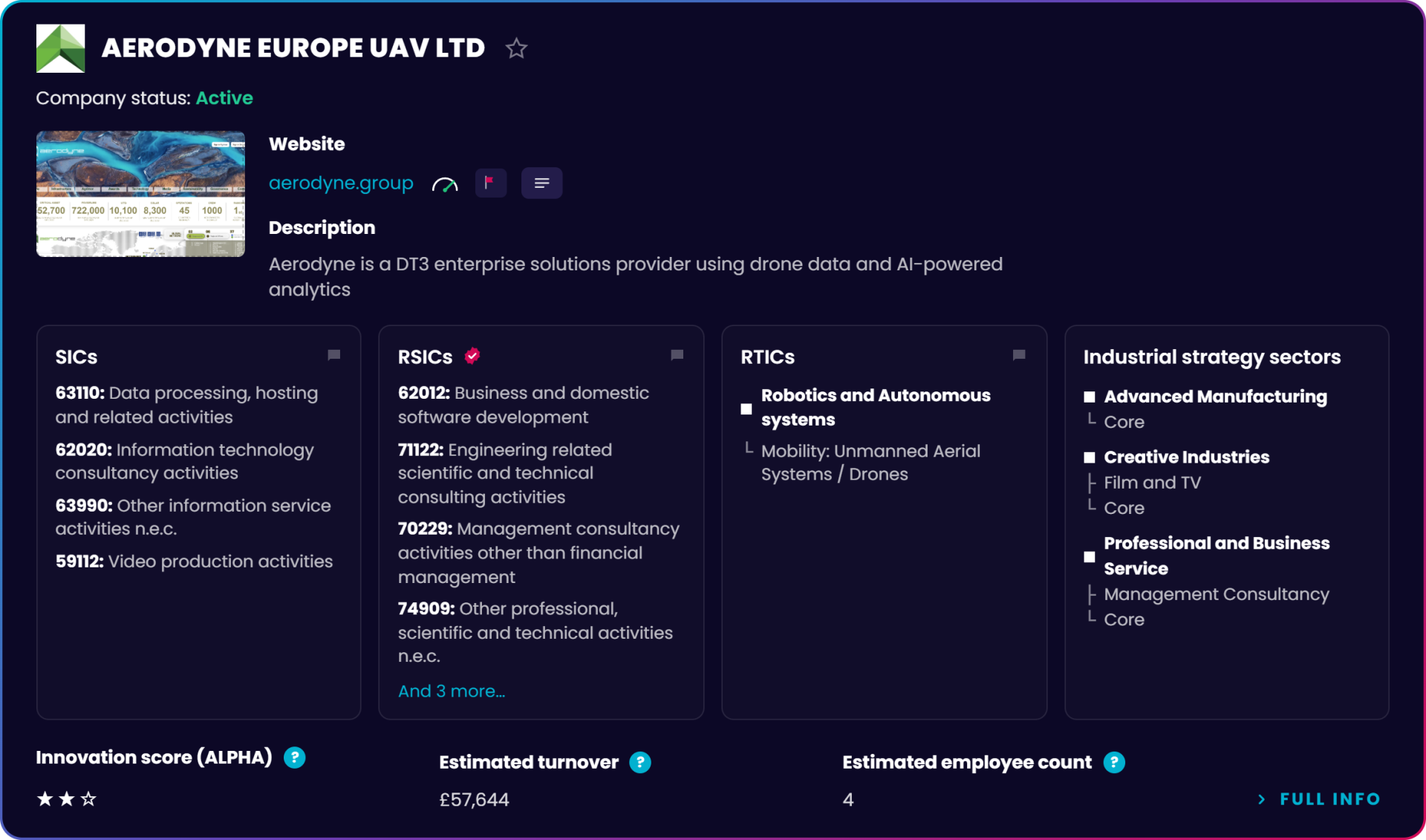
It has four SIC codes assigned to it, none of which say Aerodyne is a drone company. Selecting these codes produces a list of 43,000 companies ranging from drones through to business consultants through to local videographers. Not that helpful if you’re hunting for companies that could move into Defence.
Our RTIC definition fixes this, classifying the company into Unmanned Aerial Systems/Drones. This gives a much more tailored list to start from.
Finding viable Defence suppliers
Not only does this approach identify potential Defence companies, it also shows where the viable suppliers are, what their capacity is, and whether they are financially stable enough to take on contracts.
To illustrate why this is useful, let’s look at the location data. The map below shows where in the country the operations of such businesses are.
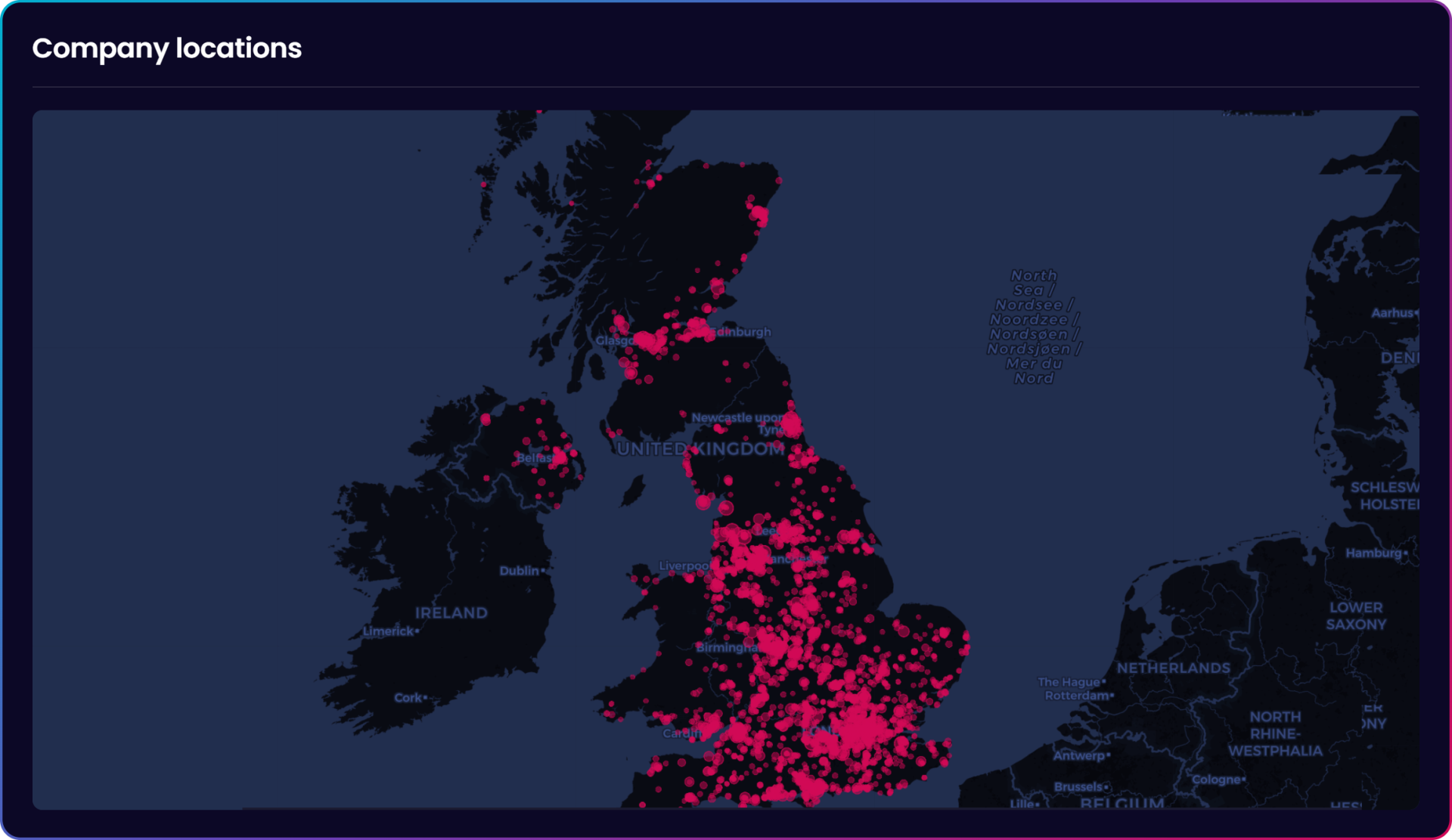
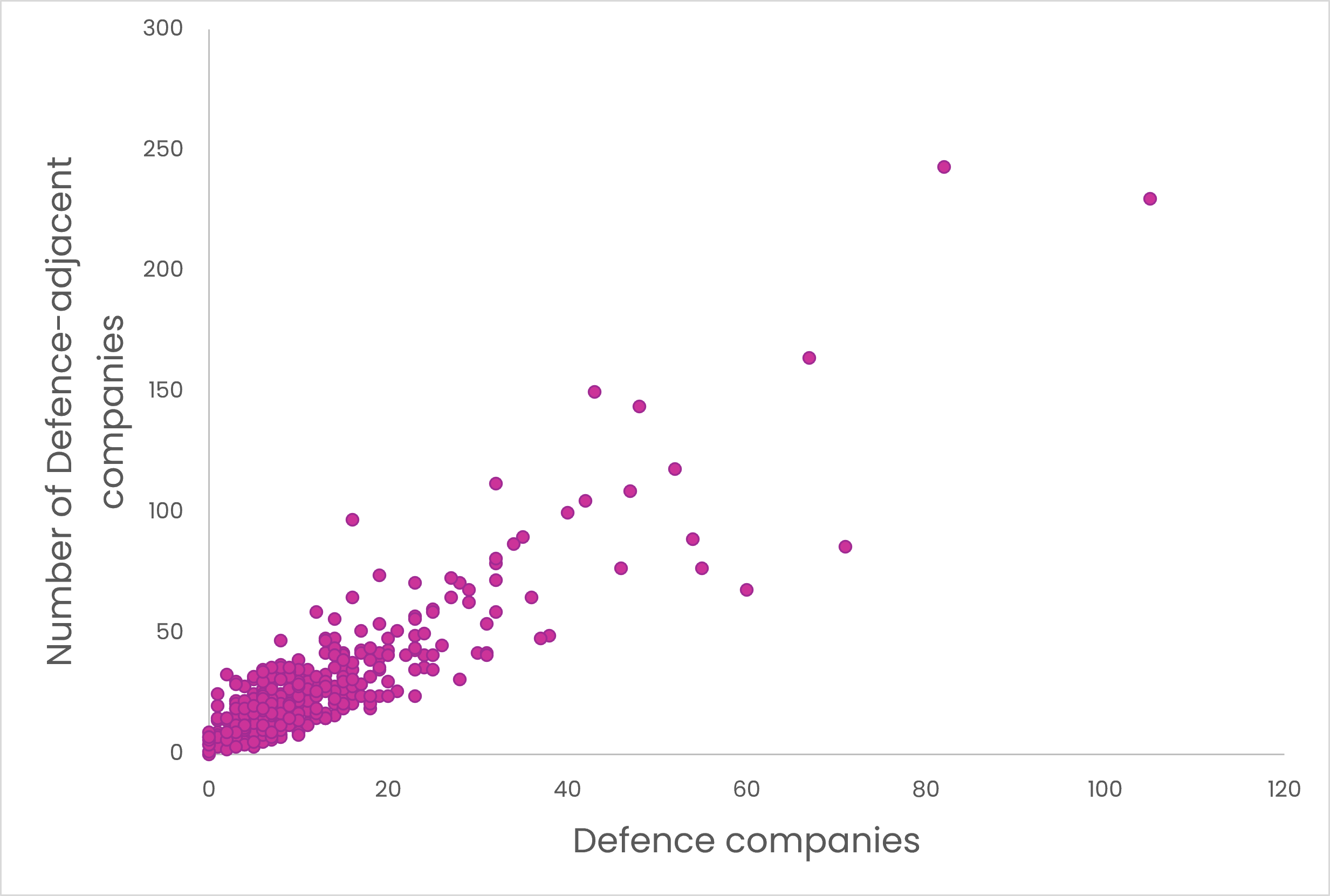
And to take that a step further, Figure 2 plots Defence and Defence-adjacent companies by local authority, highlighting where there is untapped potential to expand the Defence sector. Interesting information for those looking to increase the UK’s sovereign resilience in the sector.
If you’d like to know more about The Data City’s data on the Defence sector, get in touch or book a 121 demo today.