




Life Sciences encompasses a broad range of activities, including clinical research, instrument manufacturing, and drug discovery, just to name a few. A major hurdle in mapping this sector is that the Standard Industrial Classification (SIC) codes haven’t kept pace with new sectors. As a result, a cell therapy manufacturer, a lab consumables supplier, and a clinical research organisation might all be grouped together, making it hard to identify specific companies.
That’s why we developed Real-Time Industrial Classifications (RTICs) and continually update them to reflect sector changes. Consequently, we are retiring our Life Sciences RTIC and releasing a new ‘Life Sciences Tools & Services’ RTIC. This article details This post details what has changed, the reasons behind it, as well as some interesting companies in the new RTIC.
Why we changed it
When we first built the Life Sciences RTIC, it followed the taxonomy set out in the Office for Life Sciences work. That single RTIC gave us broad, useful coverage of the sector at the time, even though it was covering a lot of large “subsectors” that were whole sectors themselves. Several of these have since become their own RTICs, such as BioPharma, Pharma tech and Engineering Biology. With those sectors now covered elsewhere, we created a new Life Sciences Tools & Services RTIC to cover the residual companies that stayed subsector-sized, rather than the sectors that had outgrown the original.
The result is a tighter, more purposeful mapping, now focused specifically on the tools, services, and materials that the Life Sciences sector runs on.
What changed
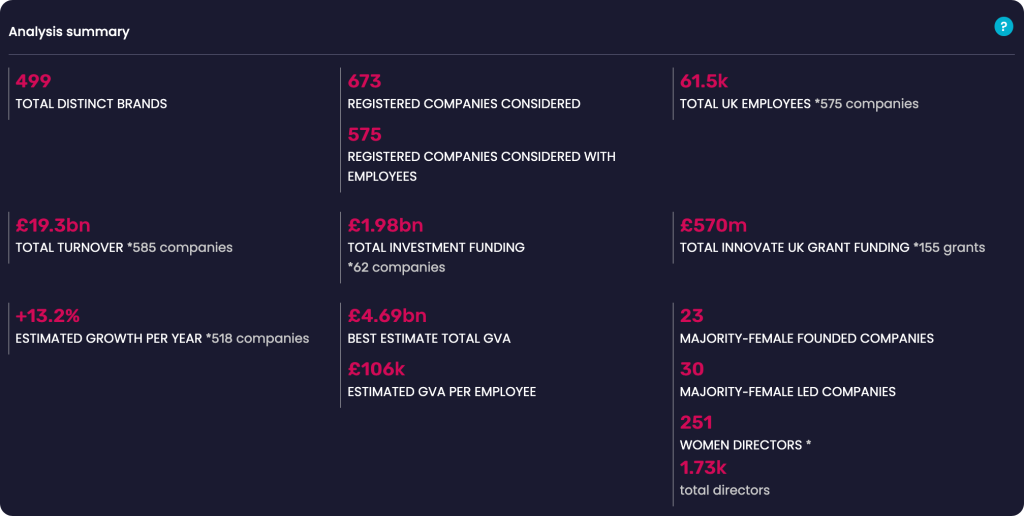
Below shows where each of the original seven have naturally been captured over time as well as how they are captured in the new RTIC.
Take Life Science contract manufacturing: Medical CDMOs make device components such as implants, surgical parts and diagnostics whilst Pharmaceutical CDMOs develop drugs and manufacture drugs. They have different customers, regulations and supply chains so each have their own vertical in this new RTIC.
CROs run clinical trials for pharma and biotech companies. They’re a huge part of how drugs get developed. Now, if you’re looking for a UK CRO, you go to one place, and they’re all there.
The lab reagents, Consumables & Chemicals vertical includes companies that make the kits, media, and materials that every lab buys regularly, the things that keep research running. The instruments & equipment manufacturers vertical sits alongside it, covering the companies that make the actual machines and devices researchers use to do the work. Between the two you’ve got the full picture of what a functioning lab needs.
AI-driven drug discovery has gained its own vertical because it’s an emerging industry. These aren’t exactly software firms or traditional pharma companies, so they don’t fit neatly into existing categories. Now, with their own dedicated space, they are easily identifiable as a distinct subsector for the first time.
Put it all together, and the RTIC now reflects how the industry truly works.
Where to find the broader picture
If you’re looking for a broad perspective on Life Sciences instead of just the supply chain, the Industrial Strategy Classifications provide that. You also have the option to create a custom view tailored to your needs. Both approaches are explained in detail in this blog here
This new updated, Life Sciences Tools & Services RTIC, offers a detailed view of the supply chain specifically. Meanwhile, the Industrial Strategy Classifications map shows the entire sector. They serve different purposes, and you might find it helpful to use both.
Explore Life Sciences Tools & Services on the Industry Engine
The best way to understand the new mapping is to log into the Industry Engine and see which companies are included. Each vertical features numerous companies, from early-stage startups to long-established firms with many years of experience. I selected one company from each vertical that stood out to me, demonstrating the diversity of the lineup.
Medical Contract Development & Manufacturing
Rua Medical Devices
Estimated turnover: £4,577,245
Estimated GVA: £2,384,14
Best estimate growth per year: +0.40%
Based in Irvine, Scotland, RUA designs and manufactures implantable medical textiles and device parts for medical and biotech companies around the world, working with clients across more than 15 countries. What sets them apart is their expertise in Elast-Eon™, a material developed specifically for long-term implants, biocompatible and stable inside the body. They handle everything from early concept through to cleanroom manufacturing and sterilisation, giving device makers a single partner from idea to finished product.
Pharmaceutical Contract Development & Manufacturing
Estimated turnover: £51,695,912
University Spinout: The Roslin Institute – the University of Edinburgh
Best estimate growth per year: +33.6%
RoslinCT grew out of the Roslin Institute in Edinburgh, the place where Dolly the Sheep was cloned in 1997, an event that changed how the world thought about biology. Today, RoslinCT is a cell and gene therapy manufacturer, helping pharmaceutical companies take experimental treatments through development and into clinical and commercial production. They were one of the first organisations in the world to produce clinical-grade human stem cells, and they played a central role in developing exa-cel, the first therapy to use CRISPR gene editing to treat patients with sickle cell disease. They operate purpose-built manufacturing facilities in Edinburgh and Boston, with 22 cleanroom suites across both sites.
Instruments & Equipment Manufacturers
Estimated turnover: £659,916
Estimated GVA: £608,824
Estimated total investment: £3,990,000
Spun out of the University of Sheffield in 2021, Exciting Instruments makes single-molecule fluorescence instruments for Life Sciences research and drug discovery. Their EI-FLEX system lets researchers observe individual molecules in solution in real time, capturing the fleeting states and rare interactions that conventional lab methods average out and miss entirely. Until now, this kind of measurement required a specialist dark room, a custom-built setup but exciting Instruments put it on a benchtop. Their instruments are now in use at leading academic institutions and biopharma companies across the UK, US, and Europe.
Contract Research Organisations

Estimated turnover: £42,299,541
Estimated GVA: £26,425,979
Estimated employee count: 525
MAC Clinical Research is a contract research organisation. It runs clinical trials for pharmaceutical and biotech companies, covering every phase of drug development from Phase 1 through to Phase 4. Most CROs contract out to third-party clinics to run trials. MAC instead owns its own network of research sites across the UK, so it manages recruitment and trial delivery directly.
The company started out focused on memory conditions and neurology. It has since taken on trials in other areas, including neuropsychiatric disorders, neurodegenerative diseases, inflammation, and pain. More recently, it has also run trials involving psychedelic compounds, such as ibogaine.
Lab Reagents, Consumables & Chemicals
Estimated turnover: £794,882
Estimated total investment: £5,300,000
Best estimate growth per year: +43.6%
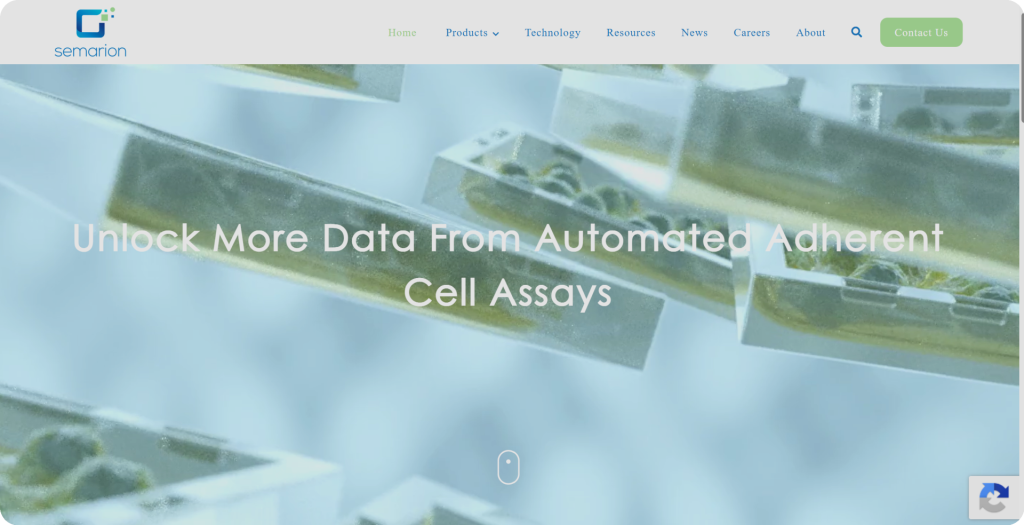
Based at the Cavendish Laboratory in Cambridge, Semarion makes a new type of lab reagent that speeds up how drugs are tested on human cells. The challenge they are solving is cells that grow on surfaces, which behave more like cells in the body, are notoriously difficult to use in the automated, high volume screening setups that modern drug discovery relies on. Semarion’s SemaCyte® microcarriers act as barcoded carriers that let you grow cells normally, package, then freeze, and dispense them into standard lab equipment like any other reagent. Each carrier has a unique optical barcode, so multiple cell types can be tested in the same experiment and told apart automatically by software.
AI-Driven Drug Discovery

Estimated turnover: £250,000
Estimated total investment: £89,790,000
Best estimate growth per year: +1.4%
Based in Cambridge, Healx uses AI to find new treatments for rare diseases. The company’s focus was shaped after its founders met a father who had spent a decade trying, largely without success, to find a treatment for a rare genetic disorder affecting his two sons. Rather than developing new drugs from scratch, which is slow and expensive, Healx uses an AI platform to find new uses for compounds that already exist. Their system analyses millions of drug and disease relationships to surface connections that would be impossible to spot manually and can run multiple disease programmes in parallel.
To conclude
These six companies are a small sample of what’s captured in the new update. Log in to the Industry Engine to explore the full list, filter by region, growth, or funding stage, and build your own Life Sciences story.
If you have questions about the new structure, or want to talk through how to use it, get in touch.
Not a customer and want to dig into the data yourself? Sign up for a free trial.