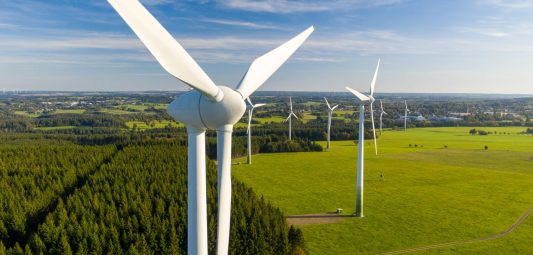





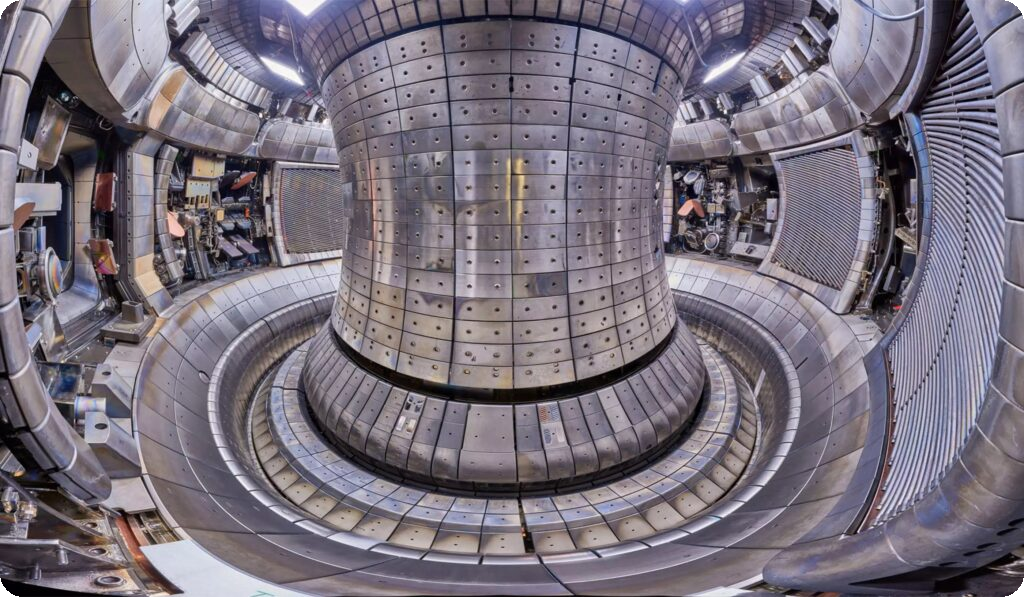
Fusion has spent seventy years as a physics problem. It is now becoming a construction problem, a supply chain problem, and increasingly, a jobs problem. The UK sits at the centre of that shift. Culham has been Europe’s fusion research hub since 1965, and that legacy is now spinning out a cluster of private companies racing to turn plasma physics into a power station, and that legacy is now spinning out a cluster of private companies racing to turn plasma physics into a power station.
Using our AI-powered Real-Time Industrial Classifications (RTICs) for Energy Generation, we have pulled together the UK’s biggest Fusion Energy employers. RTICs are our answer to inaccurate SIC codes and out-of-date industry data. A tokamak developer and a neutron source manufacturer have nothing in common under a standard industry code, but they sit in the same supply chain, and RTICs are built to see that.
From spherical tokamaks to specialist materials, these ten companies show how much of the UK’s fusion industry is still measured in tens of people rather than thousands, and why that is about to change.
Before the top ten, here is a snapshot of the wider group these companies came from.
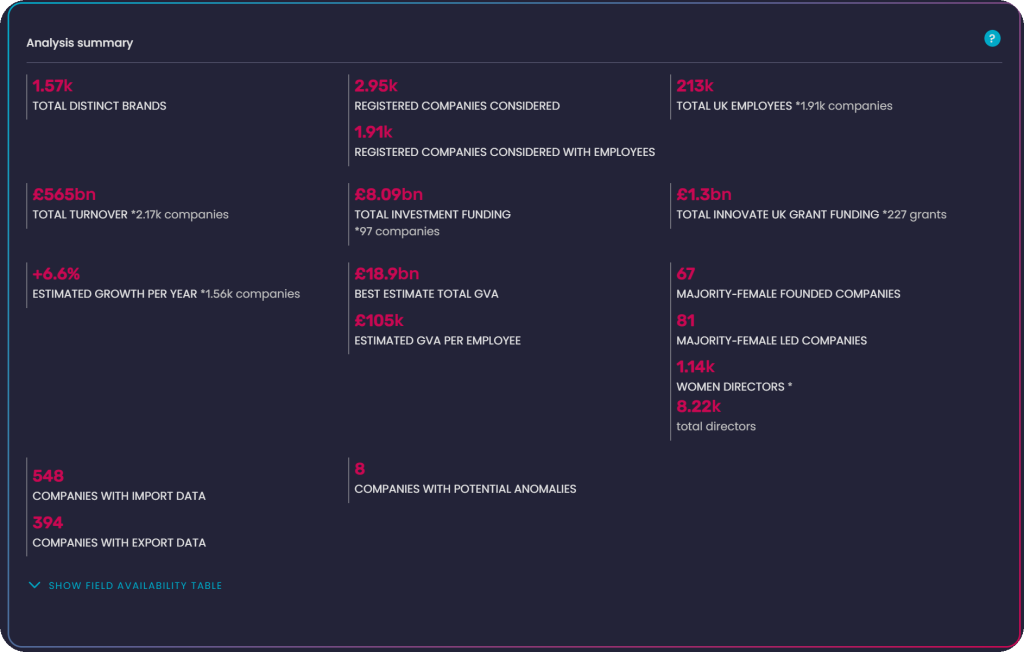
The Energy Generation RTIC
Energy Generation covers 2.95k registered companies (1.57k distinct brands), with a combined turnover of £565bn and £8.09bn in investment funding across 97 companies. The sector has also drawn £1.3bn in Innovate UK grant funding across 227 grants. It’s growing at an estimated +6.6% a year, employs 213k people, and generates £18.9bn in GVA (£105k per employee).
On diversity: 67 majority-female founded and 81 majority-female led companies, with women holding 1.14k of 8.22k director positions (just under 14%).
The top 10 UK Fusion Energy companies by employees
Method: companies classified under the Energy Generation RTIC within the Nuclear Fusion vertical, ranked by estimated UK employee count in the Industry Engine.
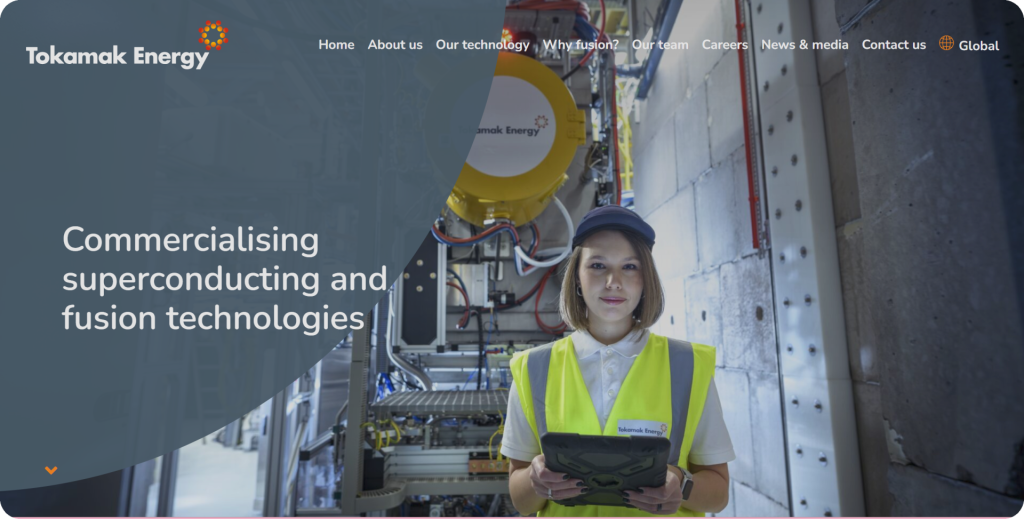
1. Tokamak Energy
- Estimated employees: 367
- Location: Milton Park, Oxfordshire
- Founded: 2009, spun out of the UK Atomic Energy Authority
Tokamak Energy designs and operates spherical tokamaks paired with high temperature superconducting (HTS) magnets, a combination it argues is the fastest route to a compact commercial fusion plant. Its ST40 device has reached the plasma temperatures needed for fusion, and the company is now running a $52m upgrade backed by both the US Department of Energy and the UK’s Department for Energy Security and Net Zero. It has raised an estimated £220m in investment to date and sells HTS magnets into markets outside fusion, including mobility and security.
2. Newcleo Generation (UK) Ltd
- Estimated employees: 248
- Location: London
- Part of the wider newcleo group
Newcleo is developing lead-cooled fast reactors, an advanced fission technology rather than fusion, and its inclusion here reflects how closely the two are classified together under Energy Generation.
The company was founded and headquartered in the UK in 2021, before relocating its holding headquarters to Paris in October 2024 to focus on its European projects. On the 6th August 2025, newcleo confirmed it would suspend its UK reactor development programme and substantially wind down its UK activities, following a board review that chose to concentrate resources on countries more supportive of closed fuel cycle and advanced modular reactor technologies; the company said it had engaged successive UK governments on access to Britain’s stockpile of stored plutonium without securing the “in principle” backing it needed. It continues to build reactors in France and Italy, targeting a precursor reactor in Italy by 2026 and commercial reactors from 2033. The UK entity remains on the register.
3. Step Fusion (UK Fusion Energy Ltd)
- Estimated employees: 225
- Location: West Burton, Nottinghamshire, and Culham, Oxfordshire
- Wholly owned subsidiary of UKAEA
UK Fusion Energy leads delivery of STEP, the government-backed programme to build the UK’s prototype fusion power plant at West Burton, a former coal power station site. Backed by £1.3bn of government investment, UKFE acts as the national systems integrator, bringing together industrial partners including construction consortium ILIOS to design and build a spherical tokamak targeting first operations in the 2040s.
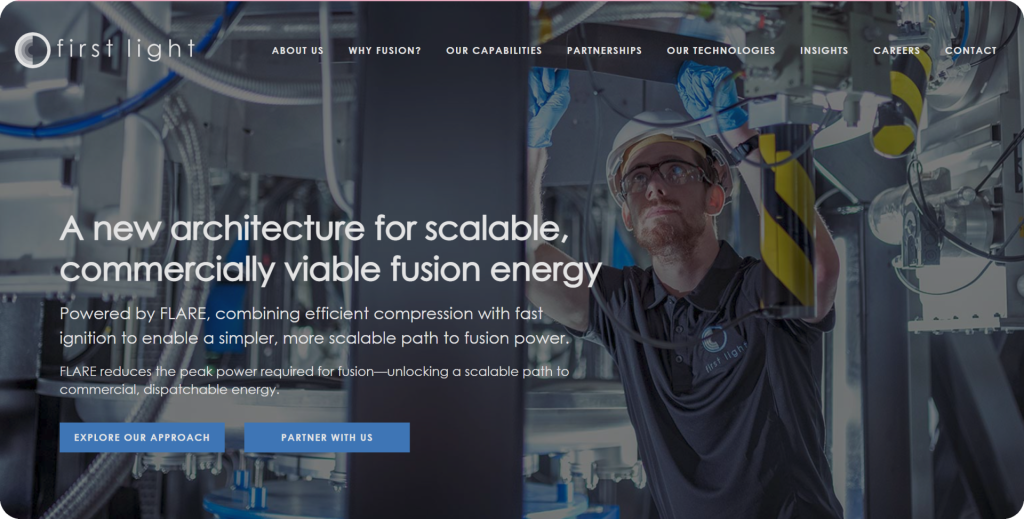
4. First Light Fusion Limited
- Estimated employees: 139
- Location: Yarnton, Oxfordshire, with a build underway at Culham
- Founded: 2011, spun out of the University of Oxford
First Light Fusion is pursuing inertial confinement fusion, firing a projectile at a fuel pellet to force it to fuse rather than relying on magnets or lasers. UKAEA is constructing a purpose-built facility at Culham Campus to house the company’s next machine, a net energy gain demonstrator, following validation of the approach by UKAEA. The company has raised over £94m to date.
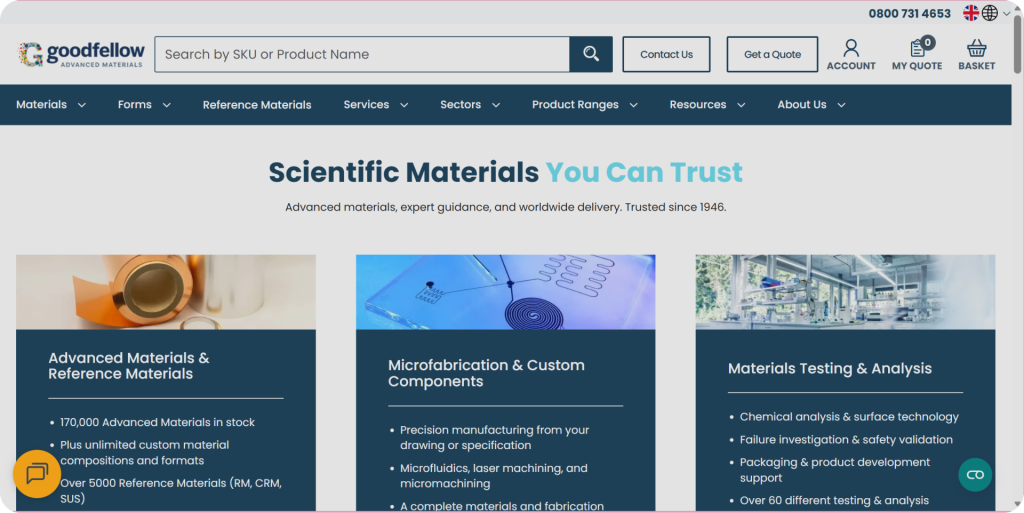
5. Goodfellow Cambridge Limited
- Estimated employees: 100
- Location: Huntingdon, Cambridgeshire
- Founded: 1974, part of Advanced Scientific Materials Limited
Goodfellow is not a fusion company in the way the others on this list are. It is a specialist materials supplier with a catalogue of more than 170,000 metals, alloys, ceramics and polymers, and fusion has become one of its fastest-growing markets. It supplied materials used in Lawrence Livermore National Laboratory’s 2022 fusion ignition breakthrough and works with CERN and the European Spallation Source, and its SIC codes as a manufacturer of fabricated metal products give no hint of that role.
6. DigiLab Solutions Ltd
- Estimated employees: 75
- Location: Exeter
- Spun out of the University of Exeter
digiLab builds AI software for uncertainty quantification, and fusion has become its largest sector. Working with UKAEA, its Uncertainty Engine platform has cut fusion simulation times by up to 100,000 times and reduced redundant test runs fourfold, turning weeks of supercomputer modelling into fast, explainable predictions for reactor design and control.

7. TAE Power Solutions Limited
- Estimated employees: 63
- Location: Birmingham, with sites in Hethel and Silverstone
- UK subsidiary of TAE Technologies, California-based
TAE Power Solutions spun out of TAE Technologies, one of the world’s largest private fusion companies, to commercialise battery control technology developed through fusion research. Its proprietary ACi platform manages battery packs for electric vehicles and grid storage, and the UK arm grew past 250 staff through acquisitions of Sprint Power and Eltrium before opening a battery testing facility in Dudley. Its financials show the heavy losses typical of a young deep-tech spinout still scaling.
8. Astral Neutronics Ltd
- Estimated employees: 38
- Location: Bristol
- Trades as Astral Systems
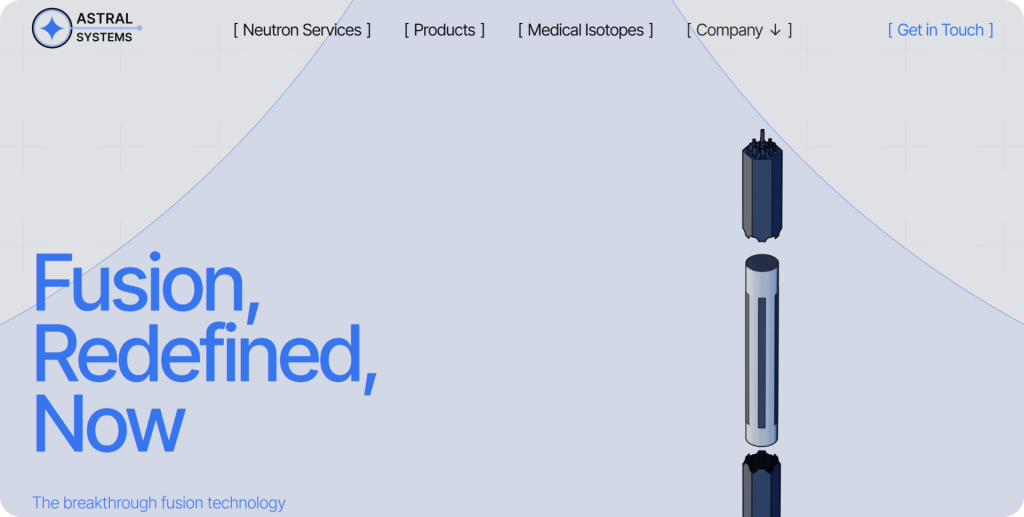
Astral Systems has built a compact fusion device that produces medical radioisotopes on demand, aimed at hospitals and researchers who currently rely on a handful of ageing reactors worldwide. Its SIC codes span basic pharmaceutical manufacturing and irradiation equipment, categories that miss its fusion technology entirely. Clients include UKAEA and the National Nuclear Laboratory, and the company has raised an estimated £27.6m to date.
9. Oxford Sigma Limited
- Estimated employees: 38
- Location: Oxford, with a satellite office at Culham
- Subsidiary of Oxford Sigma Holdings Limited, founded 2019
Oxford Sigma develops materials and neutron technology for fusion reactors, including tungsten alloys and lithium ceramics for tritium breeding. Seven years of work with UKAEA has built it into a recognised supplier on the STEP programme, and it opened a US subsidiary in Washington DC in 2024 as it looks to export that expertise.
10. Luffy AI Limited
- Estimated employees: 34
- Location: Culham, Oxfordshire
- Founded: 2019, spun out of UKAEA
Luffy AI was founded by two former UKAEA fusion physicists to bring adaptive, self-tuning AI control to electric motors, which account for roughly half the world’s electricity use. Its lightweight neural networks train in simulation rather than on the vast datasets deep learning normally needs, and the company says the approach can reach up to 400 times the efficiency of conventional methods. Luffy closed an £8.1m Series A in 2026, and its SIC code as business software development gives no clue to its roots in reactor physics.
What this tells us about the UK Nuclear Fusion Energy sector
Oxfordshire is doing most of the heavy lifting. Tokamak Energy, Oxford Sigma, First Light Fusion and Luffy AI all sit within a few miles of UKAEA’s Culham campus, and UK Fusion Energy itself splits its base between Culham and its West Burton build site in Nottinghamshire. That geography is not an accident. Sixty years of public fusion research at Culham has created the specialist workforce and supply chain that private companies are now building on top of, and the cluster keeps deepening.
BBC News reported in April 2026 that UKAEA had launched the Diagnostics Innovation Centre of Excellence (DICE) at Culham, the first dedicated fusion diagnostics facility anywhere in the world, built to keep live watch over plasma temperature, density, shape and stability during a reaction. The centre grew out of demand from international firms for the diagnostics expertise UKAEA had already built through JET, the world’s largest fusion reactor until its decommissioning in 2024, and MAST Upgrade, and it was funded largely by more than £10m in contracts those firms had already signed. DICE currently employs 20 people, alongside apprentices and PhD students training on-site, with UKAEA saying it wants the facility to keep growing in both capability and capacity.
It also shows how young this workforce still is. Outside the two largest employers, most of these companies are running teams in the tens rather than the hundreds. Fusion is still closer to R&D than to construction for most of the supply chain, even as the flagship programmes edge toward the 2030s and 2040s.
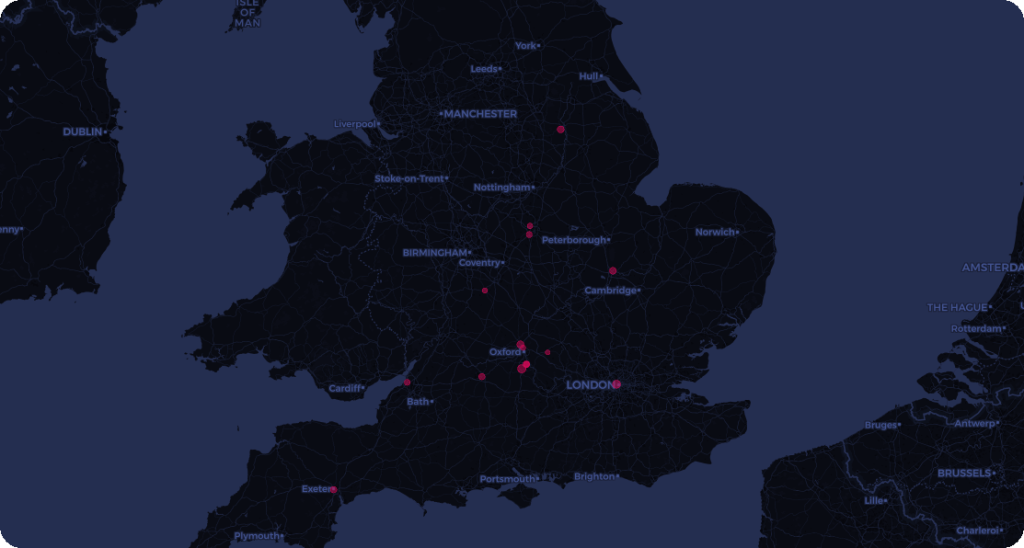
Standard industry classification does this sector no favours either. Astral Neutronics’ SIC codes place it under 21100: Manufacture of basic pharmaceutical products, nowhere near the fusion device that actually earns its revenue. Luffy AI, a UKAEA spinout building AI control for electric motors, sits under generic business software development. Goodfellow Cambridge, the materials supplier behind a landmark 2022 fusion ignition breakthrough in California, is classified as a manufacturer of fabricated metal products.
A sector this technical needs a classification system that can tell a materials supplier from a systems integrator from a device manufacturer, which is exactly the gap RTICs are built to close.
Looking ahead
Step Fusion is due to demonstrate net energy from fusion in the 2040s, and the UK government’s fusion strategy puts the global market at up to £12 trillion by 2100. Getting there depends on companies like the ten above scaling from small specialist teams into a manufacturing supply chain, and newcleo’s decision to wind down its UK reactor programme this year is a reminder that not every advanced nuclear bet in Britain will pay off. The winners will be the ones that convert research advantage into UK jobs before that window closes.
Planning policy is starting to catch up with the science. On the 8th June 2026 the government put forward EN-8, a draft National Policy Statement that would give planners a dedicated framework for siting fusion power stations, covering whichever fusion technology or output a developer proposes. It deliberately sits apart from EN-7, which governs fission technologies like SMRs and AMRs, on the basis that fusion’s risk profile is different enough to need its own rules. EN-8 is currently out for public consultation alongside parliamentary scrutiny by the relevant Commons committee, which the government wants completed by 30th November 2026, before it can be formally designated. For a sector that has spent decades as a research problem, a dedicated planning statement is a sign that the next fight is over sites and permits rather than physics.
Want to explore Fusion Energy in real time?
With The Data City, you can see every company, every vertical and every growth signal inside the sector: funding, geography, employment, SIC mismatches and more.
Sign up for a free trial and see the data for yourself.
Please note: The data from The Data City is accurate at the time the article was written but may change over time due to the dynamic, real-time nature of our data. For the latest insights, visit our platform.