





From semiconductors to silicon photonics, the UK’s computer hardware sector is powering everything from AI to edge computing. It’s a critical part of the digital economy – and one the government is backing heavily through Innovate UK.
Using our AI powered Real-Time Industrial Classifications (RTICs) for Computer Hardware, we’ve ranked the UK companies in this sector that have received the highest Innovate UK funding to date. RTICs are our innovative solution to inaccurate SIC codes and out-of-date industry data.
Powered by AI, RTICs provide precise insights into sectors like Computer Hardware, and other emerging industries, ensuring real-time industry insights at your fingertips.
These companies are leading the charge in advanced chip design, low-power memory, compound semiconductors and more.
Computer Hardware RTIC summary
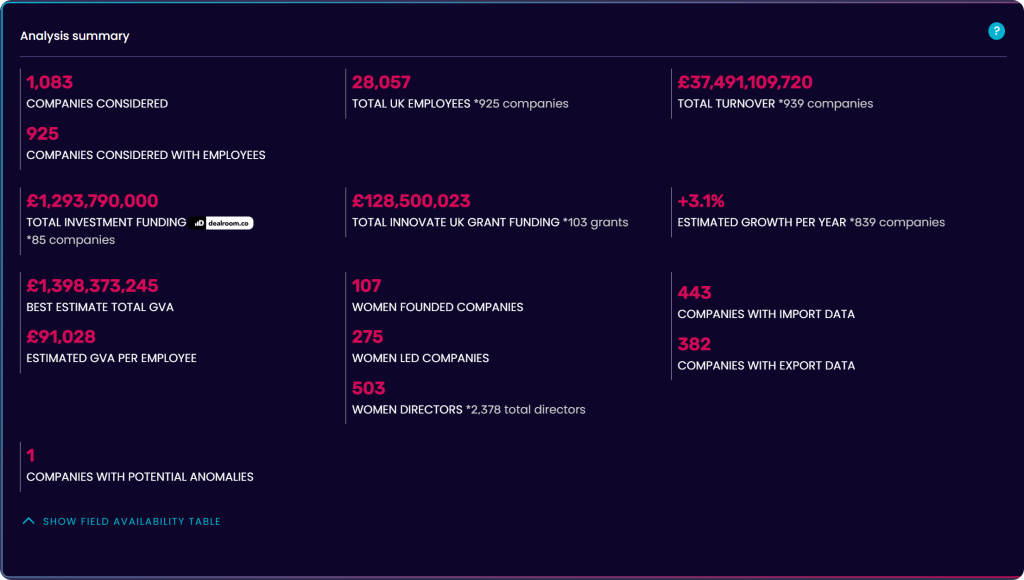
The UK’s Computer Hardware sector is far from static. Our RTIC data reveals a vibrant industry made up of 1,083 active companies, employing over 28,000 people across the UK. Together, they generate more than £37.5 billion in turnover and an estimated £1.4 billion in GVA, delivering a GVA per employee of £91,028 – a strong signal of high-value productivity.
Investment and innovation are key hallmarks of this sector. With £1.29 billion in private investment across 85 companies and £128.5 million in Innovate UK grants, the sector is not only well financially supported but deeply embedded in the UK’s tech innovation pipeline. It’s also showing steady momentum, with a +3.1% annual growth rate across 839 companies.
The following 10 companies are companies sorted by ‘Highest Innovate UK funding’ and exclude any companies known to be ultimately foreign owned.
Innovate UK funding brings together a series of grants that support innovation and research and sit within UK Research and Innovation (UKRI)’s umbrella. They publish open data on successful grants from 2004. You can read more about our Innovate UK funding data here.
1. Arm
- Innovate UK funding: £34,233,985.39
- Estimated gross value added (GVA): £148,818,865
- Location: Bracknell

Arm needs no introduction. Headquartered in Cambridge, the company’s architecture underpins most smartphones on the planet – and its R&D happens here in the UK. A cornerstone of the UK’s tech scene and a global leader in chip design.
Their SIC code is ‘82990: Other business support service activities n.e.c.’ however using our RTICs we’ve got them in Computer Hardware, AI, Data Infrastructure and Semi-Conductors. They have just over 2,800 employees and an estimated turnover of £3.4b
2. Pragmatic Semiconductor
- Innovate UK funding: £7,924,339.79
- Estimated gross value added (GVA): £63,165,493
- Location: Durham

Based in Durham, Pragmatic is rethinking what chips can do. Their flexible integrated circuits offer a low-cost alternative to silicon – enabling everything from smart packaging to wearable health sensors.
Employing over 400 people in the UK, they have a best estimate growth percentage per year of +35.1%.
3. IQE
- Innovate UK funding: £6,625,545.45
- Estimated gross value added (GVA): £17,113,497
- Location: Cardiff, Wales
IQE develops advanced semiconductor materials that power things like 5G, photonics and high-performance computing. With strong roots in Wales, they’re a key player in compound semiconductor innovation.
IQE are currently classified under the vague SIC code ‘70100: Activities of head offices’ — a common catch-all that hides what companies actually do. Using our RSIC technology, we’ve reclassified them as ‘71122: Engineering-related scientific and technical consulting activities’, a far more accurate reflection of their role in the semiconductor and advanced manufacturing supply chain.
RSICs fix outdated or incorrect SIC codes in real time by analysing what companies say about themselves, making them visible in the right sectors, to the right people, at the right time.
4. Nascent Semiconductor
- Innovate UK funding: £3,273,286
- Estimated gross value added (GVA): £808,411
- Location: Durham
Another company based in Durham. Nascent are specialists in high-speed analogue semiconductors, Nascent is focused on accelerating data connectivity in areas like automotive, AI and telecoms.
With only an estimated 15 employees, Nascent is a micro company with a best estimate growth percentage per year of +145% and an estimated turnover of £803,955, backed by the government, they’re one to watch.
5. Paragraf
- Innovate UK funding: £3,252,059.39
- Estimated gross value added (GVA): £24,200,755
- Location: Huntingdonshire
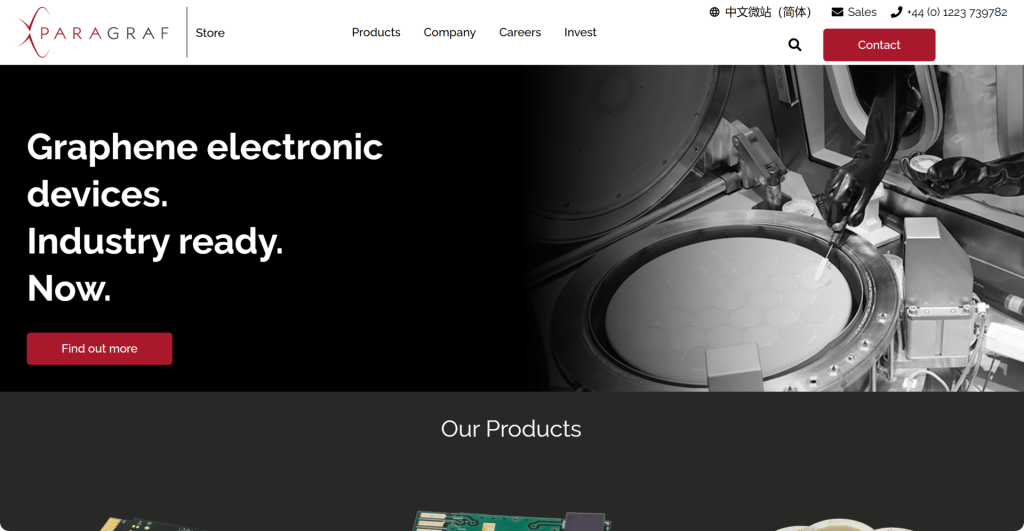
Paragraf is a medium sized, university spinout with a best estimate growth per year of 38.1%. They’re pioneering the use of graphene in electronic devices. Their graphene-based sensors and chips are enabling major breakthroughs in industrial, medical and energy applications.
6. CamGaNDevices
- Innovate UK funding: £3,191,134
- Estimated turnover: £4,465,296
- Location: Cambridge
CamGaN is working at the intersection of III-nitride semiconductors and power electronics, helping deliver energy-efficient solutions for next-gen devices.
It has a best estimated growth per year of +35.2% and its latest Innovate UK funding was for £2,128,750, the funding competition was APC24: Industrialising net-zero automotive technology and it was for project Re-Gen: High efficiency and high integrity inverters.
7. SureCore
- Innovate UK funding: £2,412,586.01
- Estimated gross value added (GVA): £345,030
- Location: Sheffield

Based in Sheffield, SureCore is another university spinout. They’re tackling one of the biggest challenges in computing – power consumption. Their ultra-low-power memory IP is designed for everything from wearables to AI accelerators.
With an estimated employee count of 66, they have an estimated growth per year of +35.2%. Their SIC code is ‘72190: Other research and experimental development on natural sciences and engineering’ which is quite accurate. Using our RTIC technology we have placed them in Life Sciences, Quantum Economy and Semiconductors.
8. Clas-SiCWafer Fab
- Innovate UK funding: £1,391,119.3
- Estimated gross value added (GVA): £19,177,957
- Location: Durham
Clas-SiC operates the UK’s first open-access silicon carbide wafer foundry. Their work is vital to the electrification of transport, renewable energy and other high-power systems.
Clas-SiC is a medium sized company with an estimated growth per year of +27.2%. Their latest funding was awarded in 2025, it was for £212,728 and part of the Industrial strategy challenge fund.
9. Camutronics
- Innovate UK funding: £1,630,263.3
- Estimated gross value added (GVA): £323,364
- Location: Durham
A specialist in printed electronics, Camutronics is building out capabilities in low-cost, flexible circuit manufacturing – offering scalable hardware innovation.
Camutronics are a university spinout with an estimated employee count of just 6. Their latest funding awarded was for £267,120 and was part of the UK-Taiwan Collaborative R&D fund.
10. IntrinSic
- Innovate UK funding: £1,301,305
- Estimated gross value added (GVA): £1,238,942
- Location: London
Intrinsic builds high-speed semiconductor solutions for optical communications, supporting the explosion of bandwidth demand driven by cloud, data centres and AI.
Their last Innovate UK funding grant was in May 2025, for £303,109, it was part of the Eureka collaborative R&D: Eurostars 3 Call 7. They have a best estimated growth per year of +127%, they employ around 20 people.
Why this matters
These are the companies shaping the future of the UK’s semiconductor and computer hardware landscape, a sector critical to everything from national security to net zero.
At The Data City, we’re able to surface insights like this in seconds using our RTIC for Computer Hardware, which brings together company websites, financials, funding, and more, in one searchable platform.
Want to explore Computer Hardware in real time?
Sign up for a free trial and see the data for yourself.
Please note: The data from The Data City is accurate at the time the article was written but may change over time due to the dynamic, real-time nature of our data. For the latest insights, visit our platform.