





Staying current with fast-moving sectors like MedTech is challenging due to outdated classification systems. For instance, companies developing AI-powered medical imaging tools are often classified as “software development” or other generalised SIC codes, which obscures their role as MedTech innovators. Similarly, startups creating diagnostic devices may be overlooked because existing codes do not capture modern, cross-disciplinary advances. These misclassifications hinder researchers, policymakers, and investors from accurately understanding and supporting the sector.
That’s why we’ve updated our MedTech Real-Time Industrial Classification (RTIC) to deliver a real-time, machine learning–powered view of the companies shaping this vital part of the UK tech ecosystem. Our machine learning approach analyses multiple data sources, including company websites, public filings, and sector-specific keywords, to identify and classify businesses based on their actual activities rather than outdated codes.
This blog explains our approach to mapping the MedTech sector, highlights key updates and their significance, and showcase spotlights some leading innovative companies.
What is MedTech?
The UK’s MedTech sector includes companies developing tools and technologies to improve patient care. The sector is broad, with innovations ranging from AI-powered diagnostics to advanced materials and robotics, as demonstrated by the example companies below. This structured mapping provides a clear understanding of the current MedTech landscape.

Mapping the MedTech sector
With an estimated yearly growth rate of 2.9%, the way we define the sector hasn’t kept pace with this sector’s evolution. The UK still relies largely on SIC codes last revised in 2007, meaning many technology-led healthcare businesses don’t sit comfortably within existing categories. Companies operating in frontier sectors are often scattered across classifications that fail to reflect the reality of what they do.
To address this, The Data City developed Real-Time Industry Classifications (RTICs). Instead of relying on static labels, RTICs use machine learning and website analysis to identify companies based on real-world activity. This approach provides a more accurate and current view of the UK’s MedTech landscape, reflecting how the sector operates today.
What’s changed?
Our mapping includes seven verticals: Advanced Materials, Artificial Intelligence, Extended Reality, Imaging, Monitoring Technologies, Photonics, and Robotics. These areas represent the core innovations in MedTech and remain unchanged.
In this update, we refined taxonomy definitions, tightened boundaries, and improved website matching, increasing precision and reducing the company list from 1,500 to 900. The most significant change is the removal of companies that use AI for drug development, as they are now classified under our Pharma RTIC.
By refining the verticals, updating the taxonomy, and sharpening the sector boundaries, we’re giving researchers, policymakers, and investors a far clearer and more accurate picture of where the sector stands today.
What does the MedTech ecosystem look like now?
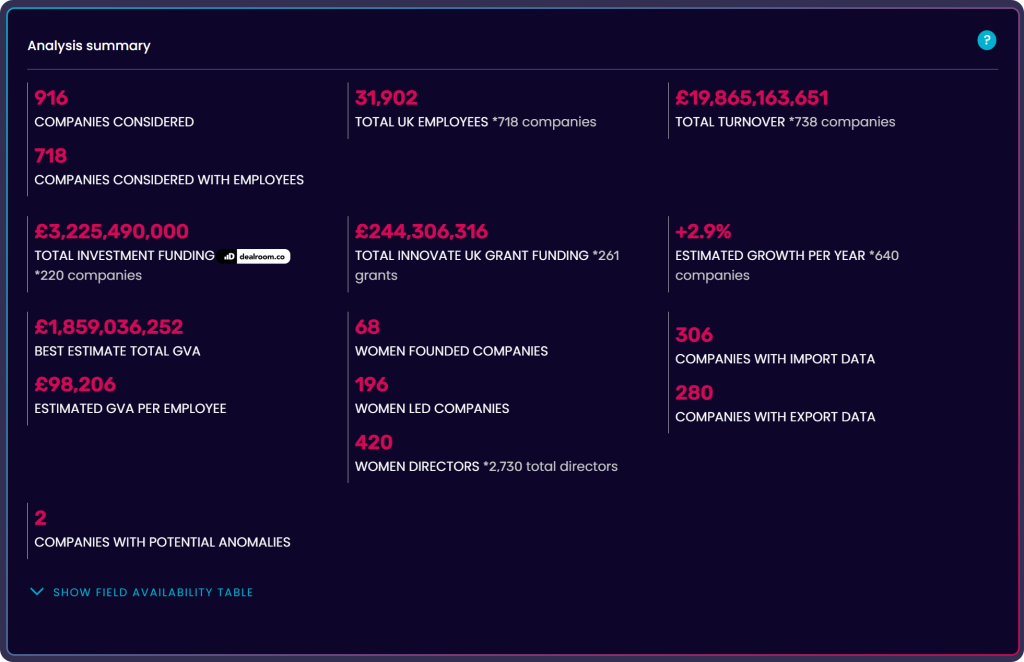
The MedTech RTIC captures a dynamic and investable segment of the UK economy, with 916 companies (including subsidiaries) identified.. Together, these businesses employ 31,902 people across the UK and generate a combined £19.9bn in turnover. With an estimated £1.86bn in GVA and £98,206 GVA per employee. Growth is steady at 2.9% per year across 640 companies, showing a sector that is scaling, not stalling.
Investment and innovation signals reinforce that strength. MedTech companies have secured £3.2bn in investment funding across 220 businesses and £244m in Innovate UK grant funding spanning 261 grants. The ecosystem also shows global reach, with 306 companies importing and 280 exporting, alongside encouraging diversity indicators, including 68 women-founded, 196 women-led companies, and 420 women directors. In short, MedTech is not just a frontier Life Sciences vertical, it is a productive, funded, and internationally connected sector with the foundations for sustained growth.
Here are some companies from the RTIC we think deserve some spotlight.
Oxford Medical Simulation
Estimated turnover: £5,600,000
Incorporation date: 17th November 2014
Location: Southwark, London
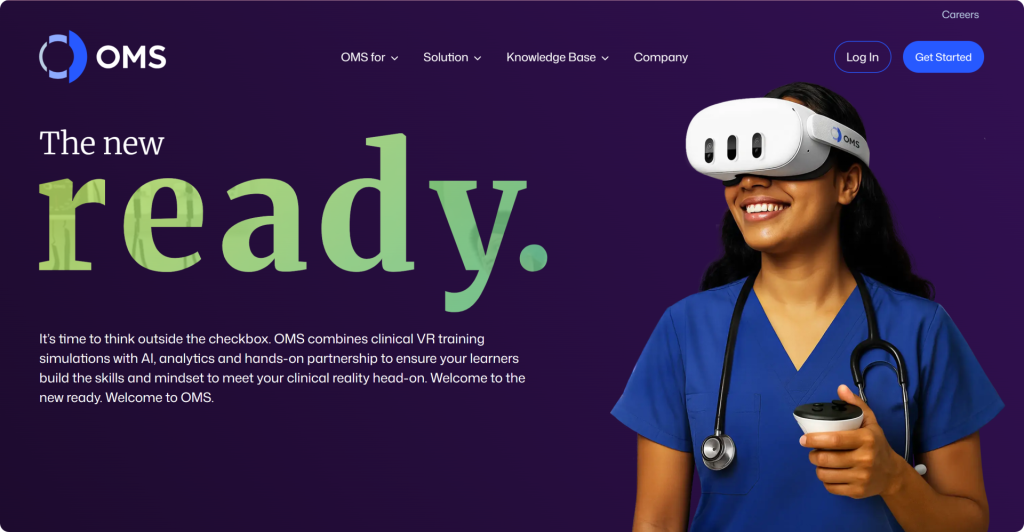
Oxford Medical Simulation is a London-based healthcare technology company that develops virtual reality training software for clinicians. They have a best estimated growth per year of 74%, they got series A funding from Frog Capital in January 2024.
Their platform enables nursing students, doctors, and other healthcare professionals to practice realistic clinical scenarios in a safe, repeatable environment before treating patients. By providing on-demand VR training, OMS helps universities and healthcare organisations expand clinical education despite limited placement availability and simulation space.
Siloton
Estimated turnover: £810,000
Incorporation date: 1st April 2020
Location: Westminster, London
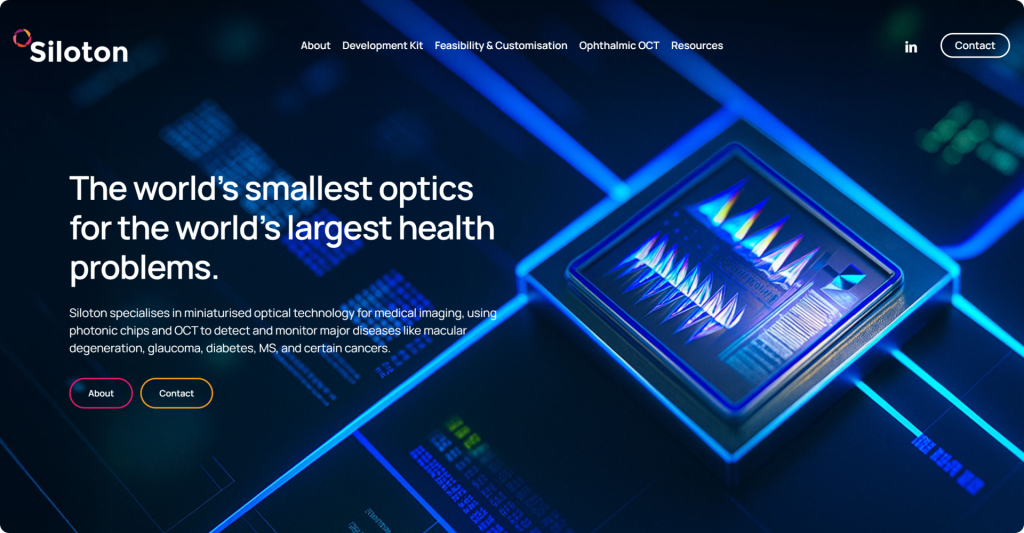
Siloton is a micro health-tech company developing next-generation eye-imaging technology to make retinal scans more accessible, affordable, and portable. Its focus on optical coherence tomography (OCT) delivered through photonic chip technology reduces both the size and cost of traditional clinical devices, while maintaining high image quality.
Siloton’s platform is intended to support earlier detection and more frequent monitoring of retinal conditions such as age-related macular degeneration (AMD), diabetic retinopathy, and glaucoma. Increased accessibility could reduce pressure on hospital eye services while allowing patients to be monitored closer to home.
The company positions its innovation at the intersection of photonics, semiconductor engineering, and medical imaging, aiming to transform how retinal disease is screened and managed within healthcare systems.
CMR Surgical Limited
Estimated turnover: £58,000,000
Incorporation date: 27th January 2014
Location: South Cambridgeshire
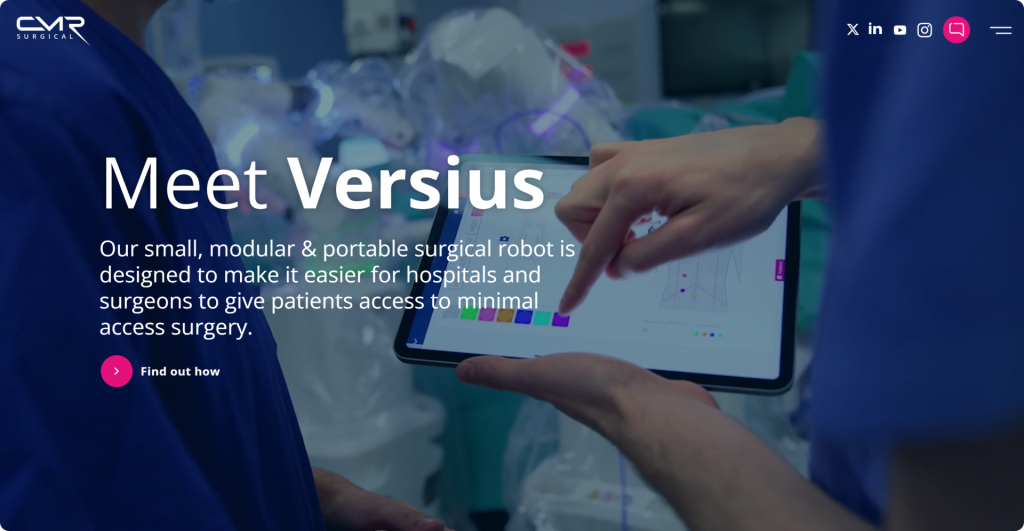
CMR Surgical is a global medical device company dedicated to transforming surgery through its next-generation surgical robotic system, Versius. The company’s mission is to make minimal-access surgery more accessible and affordable worldwide. They have a best estimated growth of 8.4% and last received funding in April 2025.
The Versius system supports surgeons in performing complex procedures with greater precision and flexibility and integrates seamlessly into existing operating rooms.
Orthox
Estimated turnover: £180,000
Incorporation date: 17th November 2014
Location: Oxfordshire
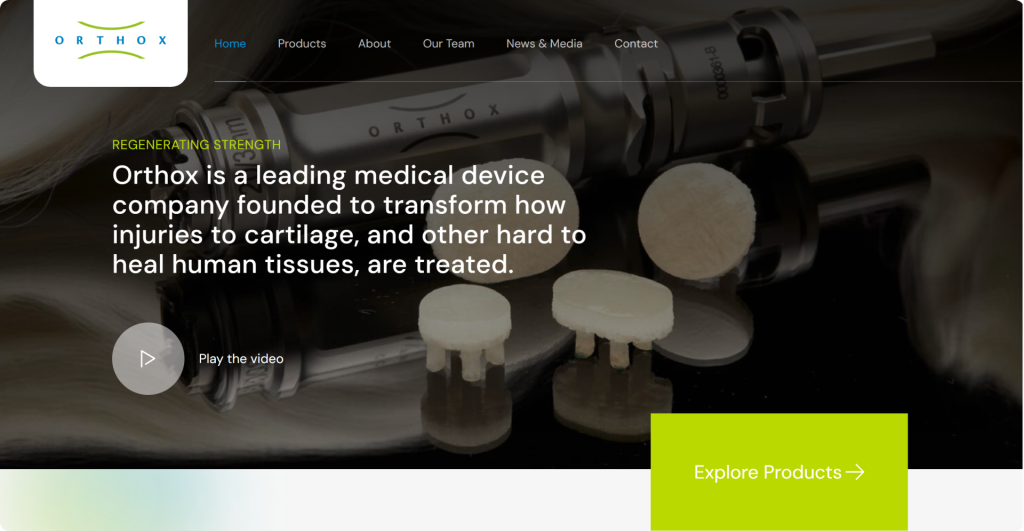
Orthox is a Micro MedTech company developing implants to repair damaged cartilage. Its lead product, FibroFix™, is a silk-based biomaterial implant designed to restore cartilage function, reduce pain, and support natural tissue regeneration through minimally invasive surgery. This approach may offer patients an alternative to full joint replacement.
The technology originates from research at the University of Oxford and is being advanced through clinical development.
Interested in learning more?
The MedTech landscape is evolving rapidly. As we track the sector’s progress, we invite policymakers, investors, and founders to engage in ongoing dialogue and partnership to drive the next wave of health innovation. Let’s work together to create meaningful impact. Please reach out, share insights, and help shape the future of UK MedTech.
Please note: The data from The Data City is accurate at the time the article was written but may change over time due to the dynamic, real-time nature of our data. For the latest insights, visit our platform.