




Introducing the UK Defence Real-Time Industrial Classification (RTIC), the first real-time, expert-validated map of UK defence companies.
The UK defence sector is central to national security, industrial strategy and regional growth. But measuring it accurately has always been difficult.
SIC codes were never designed to capture modern defence. They miss dual-use technologies and overlook frontier innovation.
The UK Government has made defence an engine for growth in the Industrial Strategy, positioning it as one of the IS-8 growth-driving sectors and signalling billions in spending, new regional growth deals, increased innovation funding and a clear ambition to expand exports. But the data infrastructure underpinning this ambition is outdated. The Government’s own analysis acknowledges that SIC codes are too restrictive to define the defence sector.
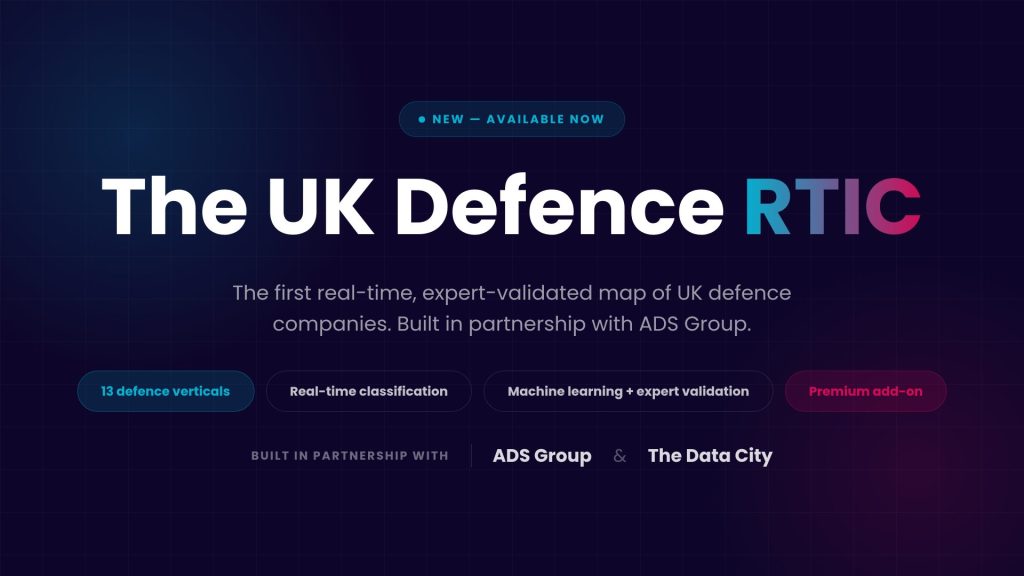
Without accurate classification, strategy becomes guesswork. You can’t grow what you can’t see. That’s why The Data City has partnered with ADS Group, the trade association for the UK’s aerospace, defence, security and space sectors, to launch the UK Defence RTIC – the first real-time, expert-validated map of UK defence companies.
Introducing the UK Defence RTIC
The UK Defence RTIC is available today as a premium add-on for both current customers and those new to The Data City.
Built in collaboration with ADS Group, it combines their sector expertise and internal database of defence companies with The Data City’s machine learning classification technology. Many of the businesses identified operate across multiple sectors, including advanced manufacturing, and may not publicly describe themselves as defence suppliers.
The dataset maps companies across 13 defence verticals, capturing the technologies, capabilities and supply chains that underpin modern defence. These range from Combat Air Power, covering companies developing technologies for and manufacturing combat aircraft, through to Surface and Littoral Ships, which includes organisations designing, building and maintaining naval and amphibious vessels.
It also captures critical enabling areas such as Logistics and Supporting Infrastructure, covering the supply chain services and physical infrastructure that support defence operations, from airfields and ports to accommodation and operational facilities.
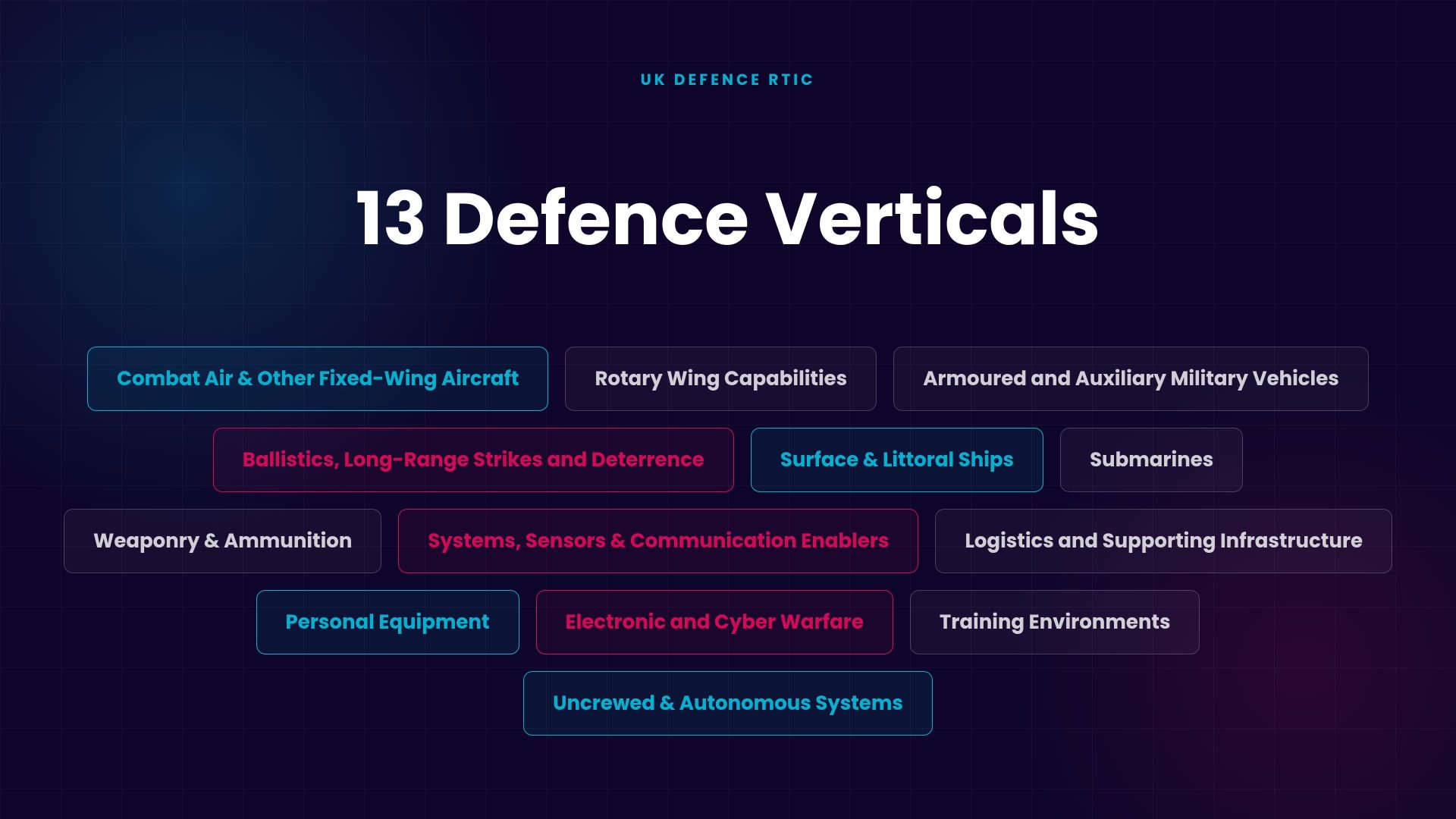
Alongside these sit additional verticals spanning frontier technologies, advanced manufacturing, digital capabilities and emerging defence systems, reflecting the full complexity of the modern sector. By combining machine learning with expert validation, the Defence RTIC captures companies that traditional classifications fail to recognise.
Why it matters now
The UK Government has positioned defence as one of the eight growth-driving sectors in the Industrial Strategy, and the Defence Industrial Strategy was released in Autumn 2025. Regional Defence Growth Deals are launching. innovation funding is rising and defence spending is set to increase, yet the Government’s own analysis acknowledges that SIC codes are too restrictive to define the defence sector.
Without accurate classification, strategy becomes guesswork. You can’t grow what you can’t see.
What you can do with it
Within the Industry Engine platform, the Defence RTIC lets you:
- Measure the true size of the UK defence sector at national and regional level
- Identify high-growth and innovative companies that don’t show up in conventional data
- Map regional defence clusters and understand how capabilities are distributed
- Track frontier technologies, including autonomy, cyber, AI and engineering biology, in real time
- Build an evidence base for Industrial Strategy, investment and policy decisions
Because the dataset is real-time, it evolves as the sector does.
How to access it
We’ll be retiring the existing defence RTIC but our new UK Defence RTIC is available now as a premium add-on, for existing The Data City customers and new users alike. If you’re already using the platform to track IS-8 sectors, Defence completes the picture.
To see the dataset in practice, book a demo with our team.
Any questions, please contact us here.